Story-Driven Outdoor Adventures in Austin, Texas
If you've enjoyed scavenger hunts, treasure hunts, or escape rooms, this is the same impulse with a city as the room and a story you've never seen before. Pick a starting point in Austin and in about a minute your custom quest is ready — anchored to real locations, written into a single connected narrative.
Generate Your Austin Quest From $9.99 · No app required · Play anytime
Three steps. One afternoon.
Pick a credit
Single, 5-pack, or 10-pack. One credit builds one full quest — you choose when to use it.
Build your quest
Choose your starting point in Austin, pick a theme and difficulty, and we'll create a custom story-driven quest in about 90 seconds.
Walk it whenever
Follow the clues to real Austin spots. Solo or with friends. 1–2 hours, at your own pace.
A city built for it.
Austin sprawls across the edge of Texas Hill Country, threaded by Lady Bird Lake and shaped by a stubborn streak of self-invention. Downtown's grid runs into the live-music dives of Red River, the food trailers of South Congress, the Mueller redevelopment northeast, and the leafy bungalow streets of East Austin. It's a city where bats pour out from under a bridge at dusk, where a coffee shop, a vintage store, and a taco joint share one block, and where the same neighborhood can hold a tech campus and a 1970s mural.
That mix is what makes Austin land so well as the setting for an outdoor quest. The walkable pockets are dense with quirky, photographable, story-ready stops — murals, dive bars, food trailers, hidden courtyards — and the wider neighborhoods give you room to drive a slower, scenic route. Pick a starting point in town — your hotel, a friend's place, the parking garage you'll be at — decide what kind of story you want, and in about a minute it builds you a one-of-a-kind quest anchored to real Austin locations, written into a single connected narrative, ready to play on your phone.
A quest, custom-built for where you'll be.
Most "things to do in Austin" lists give you the same fifty places everyone's already been. We do something different: you tell us a starting point — your hotel on Rainey Street, a friend's place in Mueller, the parking garage on South Congress — and our system builds an outdoor adventure anchored to real locations within a comfortable walking radius.
The clues are written into a single connected story. Each one leads you to a real spot — a coffee shop, a mural, a historic plaque, a quirky shop window — where you'll find the next chapter waiting. By the end, you've covered a part of Austin you'll remember not because you saw it, but because something happened there.
Think of it as the next step for people who've enjoyed a scavenger hunt or a treasure hunt and wished it had a real plot. Pick a theme, pick how long you want to be out, generate, and start — same product whether you're a local looking for a fresh date night or a visitor with three free hours before the next thing on your itinerary.
Five neighborhoods that play well.
Different parts of Austin lend themselves to different kinds of stories. The system adapts — same product, different texture depending on where you set the starting pin.
South Congress
Easy density of distinctive shopfronts, murals, and music venues. Great for first-time players — the route is naturally compact, and the vibe is photogenic enough that you'll want to stop along the way.
East 6th & Rainey
High-energy stretch ideal for groups with momentum. Quests here lean into mystery and intrigue themes well — the small bars, alleys, and patio spaces give the system a lot to work with for clue placement.
Downtown & Capitol
Perfect for longer story arcs. The Capitol, historic buildings, and statues give the system plenty of substantial anchor points for spy, historical, or political-thriller themes. Best for two-hour-plus sessions.
Zilker & Barton Springs
Greener, slower pace. The system handles family-friendly adventure and nature-mystery themes well here. Pair it with a swim afterward and the whole afternoon is built.
Mueller & North Loop
Quieter, but with strong neighborhood character. Mueller's planned streets and small businesses; North Loop's vintage shops and indie venues. Both reward urban-legend or slice-of-life storytelling.
Not a tour. Not a hunt. Not a room.
It's a story you play out.
Cryptic Quests is like a piece of interactive fiction set in the real world: every clue is a chapter in a single connected story, the locations are part of the plot, and the satisfaction comes from the narrative resolving as much as from finding things. If you've enjoyed scavenger hunts or treasure hunts, you'll recognize the shape - but the experience is closer to playing through a short story you star in.
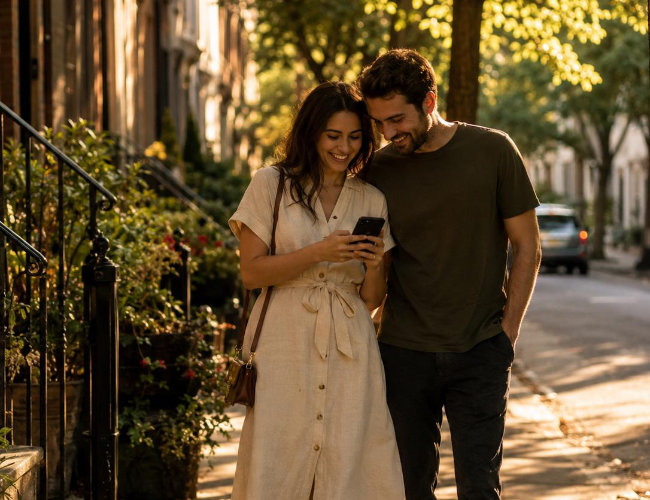
- A narrative with chapters and an ending that resolves
- Walk on your own time — no fixed schedule
- 1–2 hours outdoors at real places
- Every quest is one-of-a-kind
- Solo, date night, or the whole family
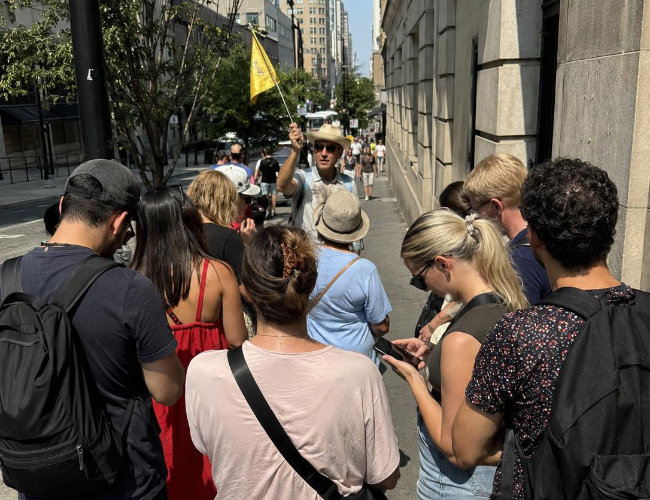
- A checklist of items to find
- Follow a guide on a fixed route at a fixed time
- 60 minutes locked inside one room
- The same experience everyone else gets
- Feels like homework on foot
Pick a tone. The story writes itself.
Every quest is shaped by a theme you choose at generation time. The system matches the storyline, the tone of the writing, and the mood of the clue artwork to whatever you pick.
Difficulty controls how much the puzzles ask of you. Casual mode keeps things moving; harder difficulties layer in real wordplay, ciphers, and observation challenges. Most groups land in the middle and adjust from there.
What an Austin quest looks like.
A real one built for a recent player — same engine that builds yours.

The Giggling Ghoul of Northside
Waylon Waffles Whitmore here! People call me the world’s greatest ghost hunter, mostly because I am the only one who wears a tin-foil cape for extra spiritual reception. Today, I am on the trail of a truly terrifying urban legend: the Giggling Ghoul of the Northside. This spirit is rumored to be a very small, very lost alligator wearing a tiny cowboy hat. Some say it is looking for its lost Silver Spork of Destiny, a magical tool that can turn any budget lunch into a five-course meal. Others claim it just likes the smell of expensive cologne and fresh sneakers.
The stakes could not be higher. If we do not find the ghoul, it might continue its reign of mild terror, like moving people’s patio chairs three inches to the left. I have heard whispers that the legend of the Northside Nibbler began back in 1994, but the truth remains as slippery as a wet noodle. Is the ghoul actually a lizard? Or is it a very confused tourist who never left? I have my equipment ready and my snacks packed. It is time to uncover the truth behind the giggles and the missing spork.
I will be recording every step of this journey in my Official Spirit Log. Every cold breeze and weird smell will be documented for science! We must follow the trail of sightings through the most unlikely spots. If we are lucky, we might even find where the ghoul keeps its hat collection. I hope you are ready for a chase that is mostly harmless but extremely silly.
Perfect for…
-
Date nights that aren't just dinner againWalk a mystery together instead of sitting across a table. Way more memorable.
-
Friends visiting Austin for the weekendShow them the city through a story instead of saying “you should check out...”
-
Locals who want something different to doYou've done the hangouts, the parks, the brunch spots. This is new every time.
-
Families who want an outdoor activityKid-friendly difficulty available. They'll be running ahead to find the next clue.
-
Solo explorers who like mysteriesJust you, your phone, and a story to follow.

What people use Austin quests for.
- Date nights Two-hour quest through South Congress or East 6th makes for a richer evening than another dinner reservation. Pick a mystery theme and let the story do the work.
- Bachelorette parties East 6th and Rainey scale to small groups beautifully. Generate a quest before the trip and have it ready when everyone's together.
- Family days Zilker and South Congress work well with kids in the loop. Lower the difficulty, keep the radius tight, pick adventure or comedy themes.
- Visitors with a free afternoon If you're flying in for a conference or a wedding, a quest is the fastest way to actually see a neighborhood instead of just walking through it.
- Team building Different from the usual escape room. Outdoor, real-world, and built fresh for whatever neighborhood is convenient for your team.
Real players. Real reviews.
One credit per quest.
Bundles save more — once you've played your first one, save costs on credits with the purchase of a bundle.
Questions, answered.
How does the system know about Austin?
We pull live points of interest from mapping data covering Austin's neighborhoods, then our system weaves them into a story tailored to where you'll actually be playing. The clues lead to real shops, landmarks, and street-level details — not generic stand-ins.
How is this different from a scavenger hunt or treasure hunt?
A scavenger hunt is usually a list of items or places to find — fun, but the connections between stops are minimal. A treasure hunt typically follows clues to one final reward. A Cryptic Quest is closer to a piece of interactive fiction set in the real world: every clue is a chapter in a single connected story, the locations are part of the plot, and the satisfaction comes from the narrative resolving as much as from finding things. If you've enjoyed scavenger hunts or treasure hunts, you'll recognize the shape — but the experience is closer to playing through a short story you star in.
Do I need to live in Austin to generate a quest there?
Not at all. You can generate a quest for anywhere you'll be — a weekend visit, a bachelorette trip, a business stop. Pick the starting point on the map (e.g., your hotel on Rainey Street) and the system builds the route from there.
What part of Austin works best for a quest?
South Congress, East 6th, Downtown, and the Zilker Park area all have rich enough density of locations to support a great quest. Mueller and North Loop work well for quieter, neighborhood-flavor stories. The system adapts the pacing to whatever area you choose.
How long does an Austin quest take?
Most quests run 1–3 hours depending on the difficulty you select and the distance setting. A casual South Congress quest is closer to 90 minutes; a longer downtown mystery can stretch past two hours.
Can I generate a quest for a bachelorette party or family group?
Yes. Choose a theme that fits the group (mystery, adventure, urban legend, or something lighter) and set the difficulty. Everyone in the group plays from the same phone or shares a quest with a small group code — it scales naturally to a party.
What does it cost?
A single quest credit is $9.99. Bundles save more: 5 credits for $29.99 (40% off) or 10 credits for $49.99 (50% off). Each credit generates one full quest.
Generate your Austin quest.
Pick a starting point, pick a theme, and your custom adventure is ready in about a minute — play whenever the day's right.