Story-Driven Outdoor Adventures in New Orleans, Louisiana
New Orleans doesn't need much help looking like the setting of a story. The French Quarter still runs in the original 1718 grid, the Garden District sits behind iron fences and oak alleys, the Faubourg Marigny and Bywater carry the music and the murals further down the river, and Treme holds one of the deepest jazz lineages in the country. French, Spanish, Creole, Caribbean, and West African traditions stacked on top of each other; voodoo lore in shop windows; second lines on a Sunday afternoon. Few American cities are this saturated with their own myth.
Which makes New Orleans an almost ideal stage for a story-driven outdoor quest — the city doesn't need invented atmosphere, just a choice of which strand to pull on. Walkable neighborhoods packed with courtyards, balconies, hidden bars, painted shutters, and street-corner shrines give a quest plenty to point at. Drop a starting point in the city — the corner you're staying near, a coffee shop you like — pick a flavor of story, and in about a minute it builds you a one-of-a-kind quest anchored to real New Orleans locations, written into a connected narrative, ready to play on your phone.
Mystery, voodoo legend, jazz history, ghost story — pick the angle, pick the neighborhood, and walk into it.
Generate Your New Orleans Quest →A quest, custom-built for where you'll be.
Most "things to do in New Orleans" lists send you to the same fifteen places everyone walks past. We do something different: you tell us a starting point — your hotel on Royal Street, your rental in the Marigny, the parking deck near Canal Street — and our system builds an outdoor adventure anchored to real locations within a comfortable walking radius.
The clues are written into a single connected story. Each one leads you to a real spot — an ironwork balcony, a brick courtyard, a music venue marquee, a hand-painted gate — where you'll find the next chapter waiting. Few American cities have New Orleans's raw material density: every block is a backdrop, and the system leans into that.
Think of it as the next step for people who've enjoyed a scavenger hunt or a treasure hunt and wished it had a real plot. Pick a theme, pick how long you want to be out, generate, and start — same product whether you're a local looking for a fresh date night, a bachelorette group on a long weekend, or a visitor between brunch at Brennan's and an evening on Frenchmen Street.
Five neighborhoods that play well.
Different parts of New Orleans lend themselves to different kinds of stories. The system adapts — same product, different texture depending on where you set the starting pin.
French Quarter
The most photographed neighborhood in America for good reason — ironwork balconies, hidden courtyards, Jackson Square, Pirate's Alley. Rich anchor points for mystery, urban-legend, spy, and historical themes. Voodoo and ghost-story material is a generation away from boilerplate here.
Marigny & Bywater
Frenchmen Street live-music corridor, colorful shotgun houses, indie venues. Less touristy than the Quarter, more local energy. Quests here lean into urban-legend, slice-of-life, and offbeat-comedy themes.
Garden District
Antebellum mansions, oak-lined streets, Magazine Street shopping, Lafayette Cemetery No. 1. Slower pace, deeper history. Perfect for longer story arcs — spy, historical, and atmospheric mystery themes settle in here beautifully.
Warehouse & Arts District
Renovated brick warehouses, the National WWII Museum, restaurant-dense blocks. Modern energy that contrasts with the Quarter. Adventure, sci-fi, or comedy themes settle in well here; pairs naturally with a museum afternoon.
Treme & Mid-City
America's oldest historically Black neighborhood, the cradle of jazz. Quieter, neighborhood-feel. Rewards stories that lean into music history, character, and place. Pair with City Park for a longer day.
Pick a tone. The story writes itself.
Every quest is shaped by a theme you choose at generation time. The system matches the storyline, the tone of the writing, and the mood of the clue artwork to whatever you pick. New Orleans particularly rewards urban-legend, mystery, and historical themes — the city's layered past gives the system material few other places match.
Difficulty controls how much the puzzles ask of you. Casual mode keeps things moving; harder difficulties layer in real wordplay, ciphers, and observation challenges. Most groups land in the middle and adjust from there.
What a New Orleans quest looks like.
A real one built for a recent player — same engine that builds yours.
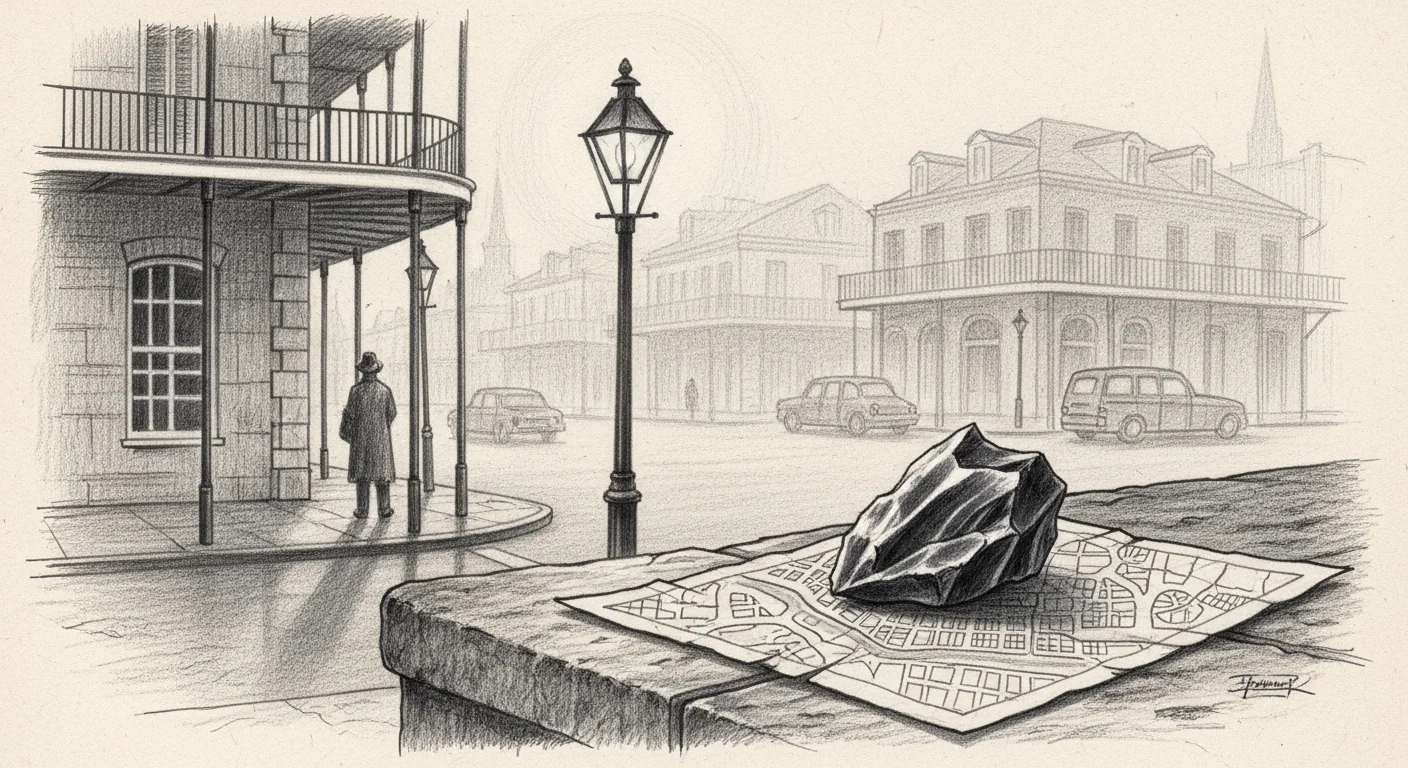
The Archive of the Shadowed Crescent
The lock on the Crescent Ledger was never meant to be broken. As a former archivist for the city’s most secretive historical society, Julien Moret knew the risks of keeping such explosive secrets. Last night, the vault was breached, and the ledger—a document containing the true, dark lineage of the city’s ruling elite—was stolen. Now, a figure known only as The Watcher in Grey is trailing you through the Central Business District, waiting for you to lead them to the backup cipher.
Inside your coat pocket, a heavy, cold weight pulses: the Obsidian Eye, a tracking artifact that vibrates when near the society’s hidden caches. The humidity of the New Orleans morning clings to your skin like a shroud, and the rhythmic clanging of distant streetcars sounds like a funeral march. You have only hours to recover the cipher and secure the ledger before the shadows of the past ignite a modern-day firestorm.
Somewhere ahead, the first marker waits, hidden in plain sight among the heroes of old. The missing pages of the ledger are more than just ink and paper; they are a death warrant for the city's peace. You must move quickly, for the man in the grey coat is no longer just watching from the corners—he is closing the gap.
Step into the humid air and let the eye guide your hands.
What people use New Orleans quests for.
- Bachelorette parties New Orleans is a top bachelorette destination — the French Quarter and Marigny are walkable, photogenic, and group-built. Generate a mystery- or urban-legend-themed quest before the trip and have it ready when everyone's together. Slot it before drinks on Frenchmen Street.
- Anniversary & date nights A two-hour quest through the Garden District or quieter Quarter blocks makes for a richer evening than another reservation. Pick a mystery or urban-legend theme and let the city's atmosphere carry it.
- Family days Garden District along Magazine Street works well with kids in the loop — the Warehouse District too if you're pairing with the WWII Museum. Lower the difficulty, keep the radius tight, pick adventure or comedy themes.
- Visitors with a free afternoon If you're flying in for Jazz Fest, a wedding, or a conference at the Convention Center, a quest is the fastest way to actually see a neighborhood instead of just walking through it.
- Team building Different from the usual escape room. Outdoor, real-world, and built fresh for whatever neighborhood is convenient for your team.
One credit per quest.
Bundles save more — once you've played your first one, save costs on credits with the purchase of a bundle.
Questions, answered.
How does the system know about New Orleans?
We pull live points of interest from mapping data covering New Orleans's neighborhoods, then our system weaves them into a story tailored to where you'll actually be playing. The clues lead to real shops, landmarks, and street-level details — not generic stand-ins.
How is this different from a scavenger hunt or treasure hunt?
A scavenger hunt is usually a list of items or places to find — fun, but the connections between stops are minimal. A treasure hunt typically follows clues to one final reward. A Cryptic Quest is closer to a piece of interactive fiction set in the real world: every clue is a chapter in a single connected story, the locations are part of the plot, and the satisfaction comes from the narrative resolving as much as from finding things. If you've enjoyed scavenger hunts or treasure hunts, you'll recognize the shape — but the experience is closer to playing through a short story you star in.
Do I need to live in New Orleans to generate a quest there?
Not at all. New Orleans is one of the country's most quest-friendly visit cities — bachelorette weekends, anniversary trips, conferences, Jazz Fest, Mardi Gras travel. Pick the starting point on the map (e.g., your hotel on Royal Street or your rental in the Marigny) and the system builds the route from there.
What part of New Orleans works best for a quest?
The French Quarter is the obvious answer — every block has anchor points the system can build around. The Marigny, Garden District, and Warehouse District all have rich enough density for great quests. Treme and Mid-City work for quieter, neighborhood-flavor stories. The system adapts the pacing to whatever area you choose.
How long does a New Orleans quest take?
Most quests run 1–3 hours depending on the difficulty you select and the distance setting. A casual French Quarter quest is closer to 90 minutes; a longer Garden District story along Magazine Street can stretch past two hours.
Can I generate a quest for a bachelorette party or family group?
Yes — New Orleans is one of the country's top bachelorette destinations, and quests fit naturally between brunch and Bourbon Street. Bachelorette groups: French Quarter and the Marigny are made for it. Pick a mystery, urban-legend, or adventure theme. Family groups: Garden District or the Warehouse District (with the WWII Museum nearby), lower difficulty, tight radius.
What does it cost?
A single quest credit is $9.99. Bundles save more: 5 credits for $29.99 (40% off) or 10 credits for $49.99 (50% off). Each credit generates one full quest.
Generate your New Orleans quest.
Pick a starting point, pick a theme, and your custom adventure is ready in about a minute — play whenever the day's right.